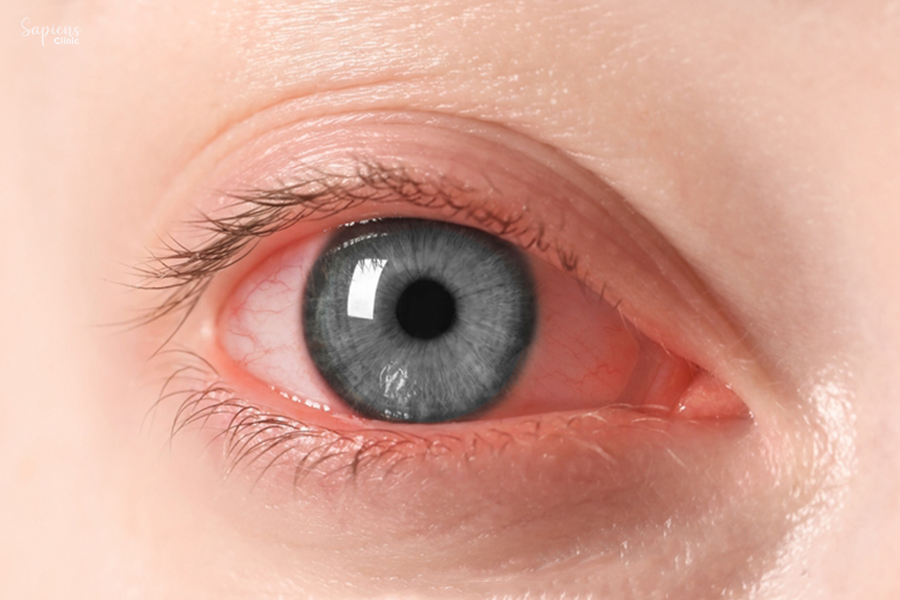
Thyroid Eye Disease (Graves’ Disease) Treatment in Malleshwaram
Are Your Eyes Telling You Something?
Do your eyes appear larger or more prominent than usual?
Have they shifted out of alignment, causing discomfort or changes in appearance?
Are you experiencing double vision, or frequent eye irritation that doesn’t seem to go away?
And have you been diagnosed with abnormal thyroid hormone levels?
If yes, it may be more than just an eye issue-it could be Thyroid Eye Disease (TED), also known as Graves’ Orbitopathy. At Sapiens Clinic in Malleshwaram, we specialize in evaluating and managing this complex condition through advanced diagnostics and personalized treatment protocols.
What Is Thyroid Eye Disease?
Thyroid Eye Disease (TED) is an autoimmune condition that affects the tissues around the eyes, particularly the muscles and fat behind the eyeball. It’s often linked to abnormal thyroid function-either hyperthyroidism or hypothyroidism. TED leads to inflammation and swelling in the orbit, causing the eyes to bulge outward (a condition called proptosis) and the eyelids to retract. Over time, this can result in visual impairment, discomfort, cosmetic concerns and reduced quality of life.
Understanding the Stages of TED
Treatment for Thyroid Eye Disease depends on its progression. The disease typically unfolds in three stages :
- Active (Inflammatory) Phase
Characterized by redness, irritation, swelling, and rapid changes in eye appearance.
Anti-inflammatory medications like steroids or immunotherapy are commonly prescribed. - Regression Phase
Some inflammation may reduce naturally. However, symptoms can fluctuate during this time. - Stable Phase
After 6-12 months of disease inactivity and stabilized thyroid function, surgery may be considered to correct residual deformities or vision problems.
Surgical Treatment Options
When TED reaches a stable stage, and inflammation has subsided, surgical treatment is often the next step. Depending on the severity, this may involve one or more of the following :
- Orbital Decompression Surgery
Reduces eye bulging by creating more space in the eye socket. - Strabismus Surgery
Corrects misaligned eyes to address double vision. - Eyelid Surgery
Repairs eyelid retraction or excess skin/fat for both functional and aesthetic restoration.
Our oculoplastic specialists at Sapiens Clinic perform each procedure with precision, prioritizing both vision outcomes and appearance.
Recovery & Aftercare
Each procedure has its own recovery time, typically 10–14 days. Mild swelling and bruising may be expected. Most patients can resume light activities within a week. Detailed instructions and follow-up schedules are provided to ensure smooth healing. Artificial tears, anti-inflammatory medications, and short-term antibiotics may also be part of your post-surgical care.
Why Choose Sapiens Clinic, Malleshwaram?
- Expertise in oculoplastic and orbital surgery
- Personalized treatment based on disease stage and visual function
- Focus on both health and aesthetics
- Advanced diagnostics and surgical techniques
- Compassionate post-operative care and long-term follow-up
Reclaim comfort, restore clarity, and rediscover your confidence.
Book your consultation with our oculoplastic surgeon at Sapiens Clinic, Malleshwaram today.
FAQs
1. Can Thyroid Eye Disease be cured without surgery?
In the early stages, medications and thyroid hormone stabilization may reduce symptoms. Surgery is usually reserved for structural issues that remain after the disease becomes inactive.
2. Is surgery safe for Thyroid Eye Disease?
Yes, when performed at the stable stage and by experienced specialists, these surgeries are highly effective and safe.
3. Will both my eyes look the same after surgery?
Our goal is to restore symmetry and improve function. In most cases, excellent cosmetic outcomes are achieved.
4. How long do the results last?
Once the disease is stable and surgery is done, results are typically long-lasting. Continued thyroid management is still essential.
5. When should I consider seeing an orbital specialist?
If you have bulging eyes, frequent dryness or redness, double vision, or have been diagnosed with thyroid dysfunction-schedule an evaluation early.
Leave a Reply